-

-
Magazine
Biorefinery Concept
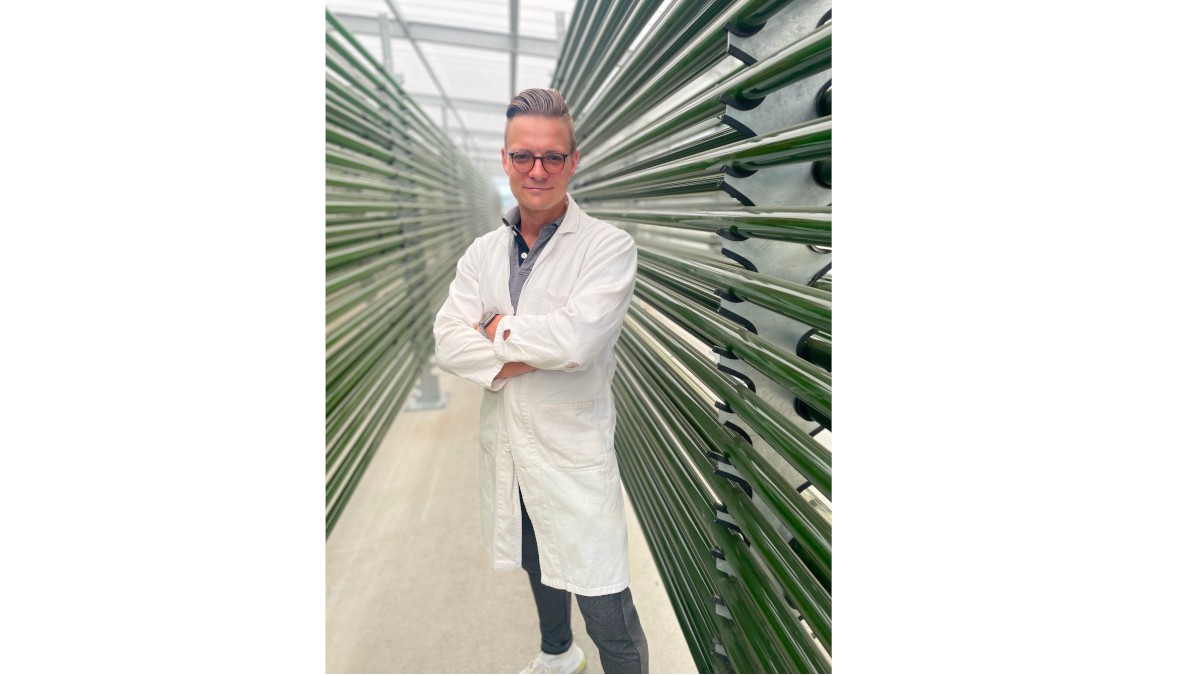
According to department head Dr Enrico Ehrhardt, project coordinator for BiOProtAl-geiNO3 at the Society for the Promotion of Medical, Bio and Environmental Technolo-gies (GMBU e.V.), the development and construction of a specially designed water treatment plant will provide an installation that is suitable for the specific applications of the project. These range from the enrichment of biomass and the purification of surface water to the recovery of water resources. The plant is ready for operation and repre-sentative functional tests will follow shortly.
Analysis of nitrate-contaminated bodies of water
As part of the project, local bodies of water in the so-called "red areas" of the Saale-Unstrut region were examined for nitrate contamination and the presence of microalgae. The goal of these analyses was to take stock of the existing nitrate quantities and to evaluate whether the concentrations are sufficient for potential use in microalgae cultiva-tion. According to Dr Ehrhardt, the long-term goal is to recycle the existing nitrate from the water and significantly reduce the addition of nitrate-rich nutrient media in cultivation.
Laboratory screening of selected microalgae
In parallel, extensive screening tests were carried out on a laboratory scale to examine the nitrate fixation rates and the biomass and protein formation rates of selected microalgae strains. Species such as Chlorella vulgaris, Arthrospira platensis and Galdieria sulphu-raria were tested. In the experiments, various parameters such as light intensity, CO2 supply, gassing rate, temperature, nitrate content and pH value were varied and their influence on the growth and metabolic performance of the microalgae was analysed. In addition, measurements were taken of the protein content, dry matter, chlorophyll a, ni-trate concentration, cell count, temperature and pH value in order to gain a comprehen-sive understanding of the growth conditions.
Practical implementation: Water treatment and HACCP
For the practical implementation of the results, a water treatment plant was also de-signed and constructed for the intended application. The initial trial runs and water tests were successful, which means that commissioning can take place shortly.
This was accompanied by the start of work on developing an HACCP (Hazard Analysis and Critical Control Points) concept. The basic concept is already in place and is now being adapted to the specific conditions of the on-site plant in order to ensure safe, hy-gienic process management.
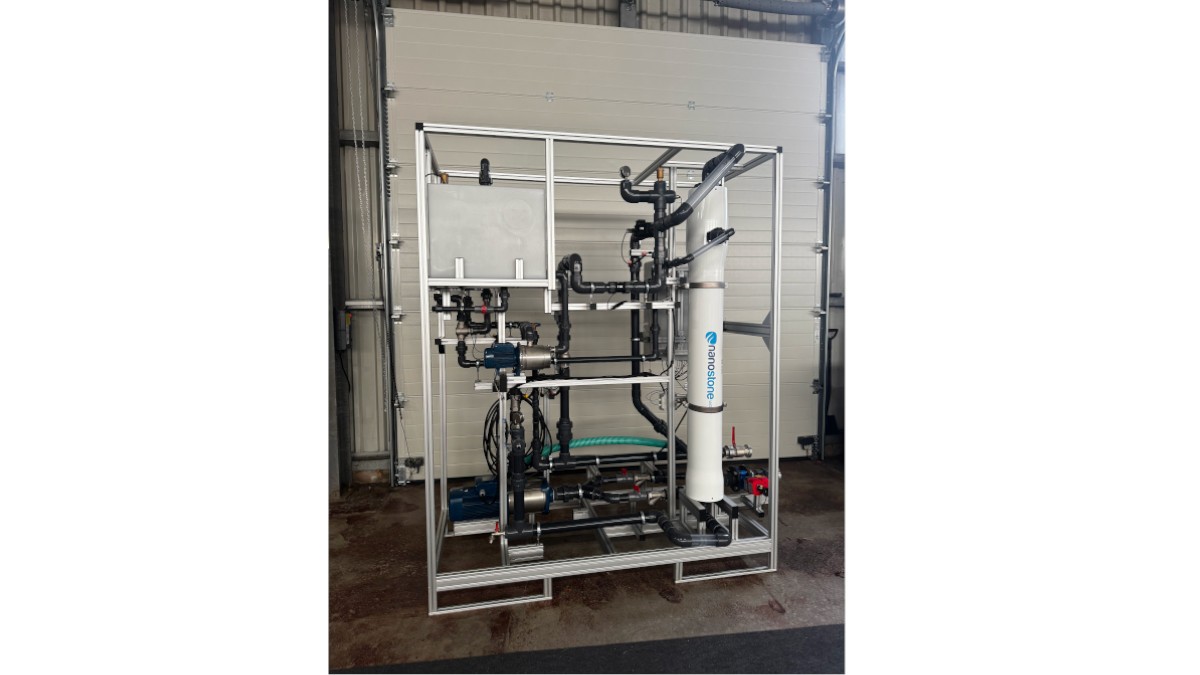
The first milestone of the innovation project is the water treatment plant. © GMBU e.V.
Current research projects
Current research projects and pilot projects are currently focusing on the transferability and expansion of the water treatment plant developed in the project to other application areas. In particular, the extent to which the technology can be used beyond the specific application of the original project should be examined. The plan is to test and implement this technology in various areas, such as the chemical purification of residual streams, general water treatment and the concentration of proteins and algae. These investiga-tions aim to validate the efficiency, flexibility and cost-effectiveness of the plant and as-sess its potential for large-scale industrial application. In addition, these results will be used as a basis for further technical development and modification of the plant.
Participants in the BiOProtAlgeiNO3 innovation project
The BiOProtAlgeiNO3 innovation project is supported by a strong alliance of science and practice: The Society for the Promotion of Medical, Bio and Environmental Technol-ogies (GMBU e.V.), Halle Environmental Technology Section, is collaborating on the project with KTS Alge GmbH, Laucha an der Unstrut, and Knufmann GmbH, Klötze in Germany. The close cooperation between these partners creates an interdisciplinary network that translates scientific findings directly into practical solutions.
About PIONEER
The German Agricultural Society (DLG e.V.), Hamburg University of Applied Sciences (HAWH) and the Food Processing Initiative e.V. (FPI) were commissioned by the German Federal Office for Agriculture and Food (BLE) to implement the networking and transfer measure "PIONEER". Funding is provided by the German Federal Ministry of Food, Agriculture and Rural Affairs (BMLEH).
Further information about PIONEER:
www.pioneer-netzwerk.de
Further information on the BMLEH's innovation promotion programme:
www.innovationsfoerderung-bmel.de
PIONEER contact person:
Marvin Anker: Phone: +49 (0)69 24788-333 or via
e-mail pioneer(at)dlg.org .