-

-
Magazine
Modern Separation Technology
Why does separation technology play such an important role in the food and beverage industry today?
Daniel Obrist: Manufacturers are faced with the task of producing natural products of consistent quality, adhering to short processing routes and, at the same time, complying with strict regulatory requirements. At the same time, economic pressure is mounting: Raw materials must be used optimally, losses reduced and energy used efficiently. Separation technology plays a key role in meeting these requirements. It stabilises processes, improves product quality and helps to better control the use of resources. Without suitable separation, many production steps cannot be carried out reliably. Examples include the clarification of juices, the separation of trub from beer, and the processing of plant-based raw materials for modern protein products. Three basic methods are available for these different tasks: Decanters, separators and belt presses.
What are the differences between decanters, separators and belt presses – and what tasks do they perform?
Daniel Obrist: The processes are based on different mechanical principles and perform very specific tasks depending on the process.
- Decanters: They operate with a horizontal drum and a screw conveyor that continuously discharges the solids. This technology is particularly suitable for media with a high solids content and for large throughputs. Typical examples can be found in the processing of plant-based raw materials, where the solid content often fluctuates greatly during the process and large quantities have to be processed at the same time.
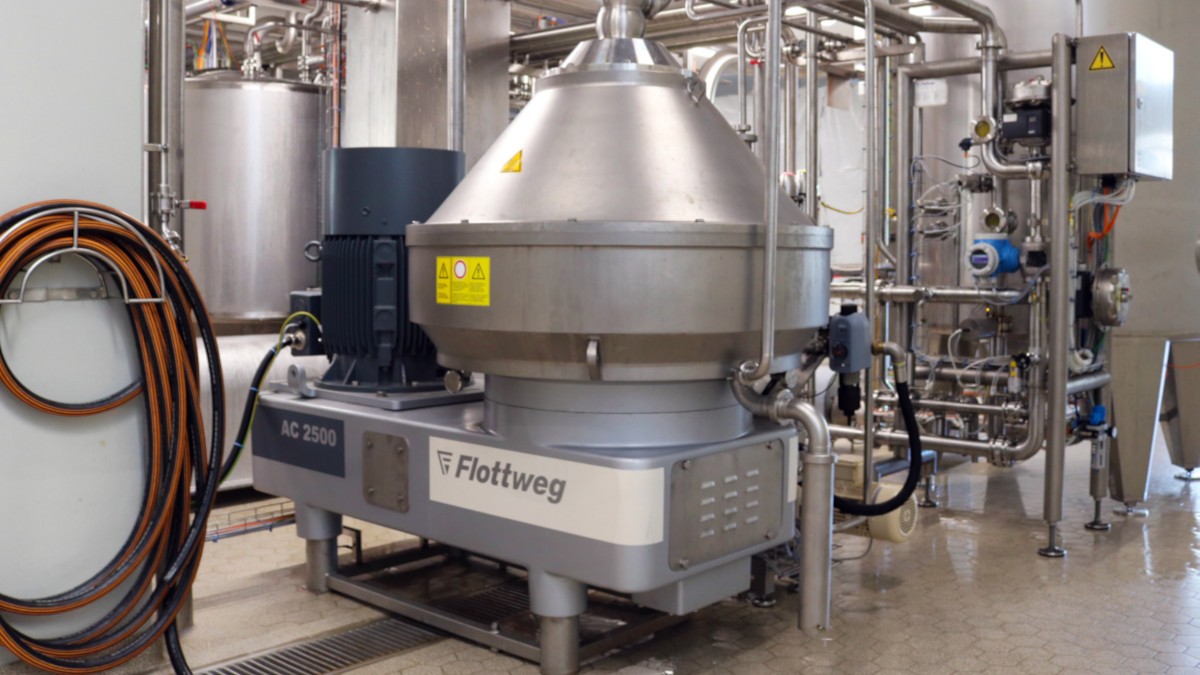
- Separators: Separators feature a disc pack in a vertical drum. They enable the clarification of very fine solids and are particularly suitable for liquid-liquid separations. They perform key tasks in beverage production, such as beer clarification, where even the smallest trub particles must be reliably removed without altering the product.
- Belt presses: They dewater mechanically between two belts and are particularly energy-efficient. This technology is ideal for fibrous materials such as fruit pomace or for large volumes where robust, continuous dewatering is required.
In summary: Decanters for robust and solid-rich tasks, separators for particularly fine separation steps, belt presses for simple, economical dewatering of larger volume flows.
Which applications do you currently see as having particular potential? Is there a practical example of this?
Daniel Obrist: One major issue is the more efficient use of existing raw materials. In classic processes such as clarification, the separation of trub substances reduces the load on subsequent process steps, which in turn saves resources and energy. The area of plant-based raw materials is currently developing particularly dynamically. This often involves upgrading secondary streams and generating additional added value. A concrete example is the extraction of plant proteins. This produces complex suspensions that must be separated precisely. Modern separation technology ensures that proteins are efficiently extracted and unwanted components are removed. Such processes clearly demonstrate that separation is not only a technical necessity, but also a decisive factor in modern product development.
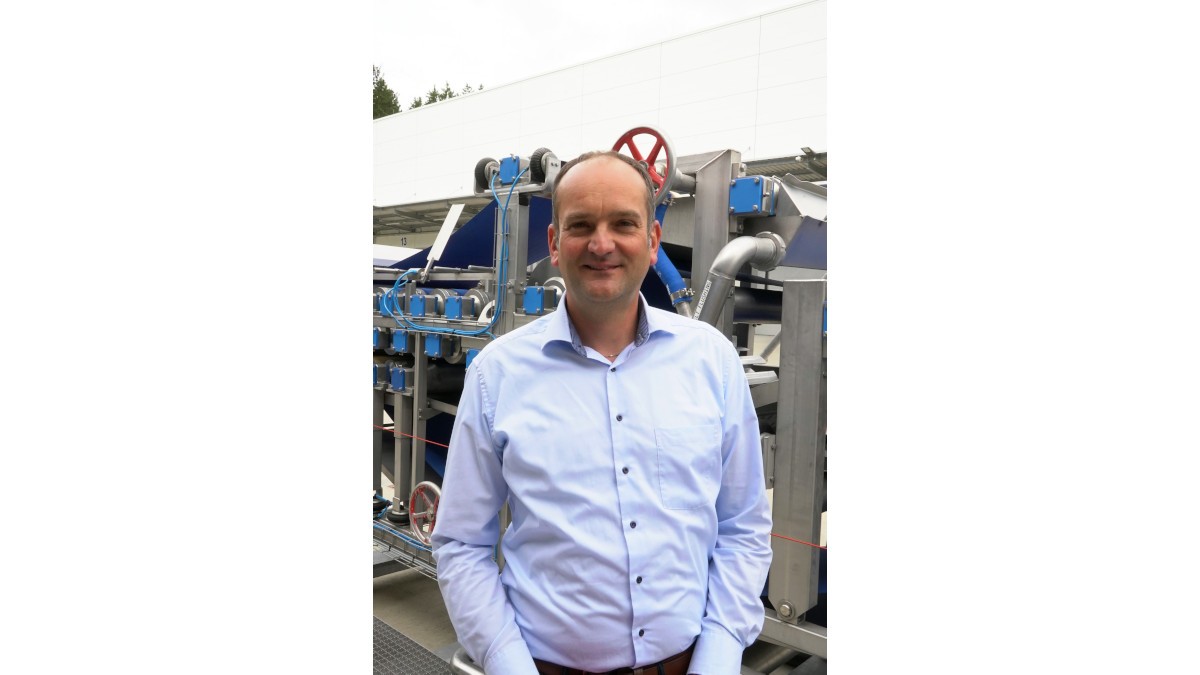
Daniel Obrist, Global Sales and Application Engineer Beverage & Dairy at Flottweg Copyright: ©Flottweg SE
How does Flottweg's separation technology contribute to automation, integration and stable production processes?
Daniel Obrist: Today, separation technology is much more than just the mechanical separation of solids or liquids. It’s embedded in networked systems that operate automatically and reproducibly.
- 1. Integration: Our machines can be seamlessly integrated into existing production lines. All relevant process parameters can be centrally monitored and controlled via common interfaces, such as PLC (programmable logic controller) or SCADA (supervisory control and data acquisition) systems. This facilitates both documentation and integration into line concepts.
- 2. Automatic adjustment: Raw materials are often subject to natural fluctuations. Modern systems automatically adjust parameters such as press pressure, drum speed, and inflow and outflow controls. This keeps product quality stable and significantly reduces dependence on manual intervention.
- 3. Process reliability: Sensors continuously acquire data such as solids content, temperature, or vibrations. Early deviations can be detected before a plant shutdown occurs. Condition monitoring systems further increase operational safety and extend maintenance intervals.
- 4. Data analysis: Real-time data is used for quality assurance, audits or optimising energy and water consumption. Cleaning processes such as CIP can also be documented more precisely, making them easier to control.
How does modern separation support energy- and resource-efficient production?
Daniel Obrist: Efficient separation processes reduce losses and lower the need for auxiliary materials such as filter materials. At the same time, energy and water consumption is optimised. Processes run more smoothly and require fewer adjustments. As a result, separation directly contributes to more sustainable production, both ecologically and economically.
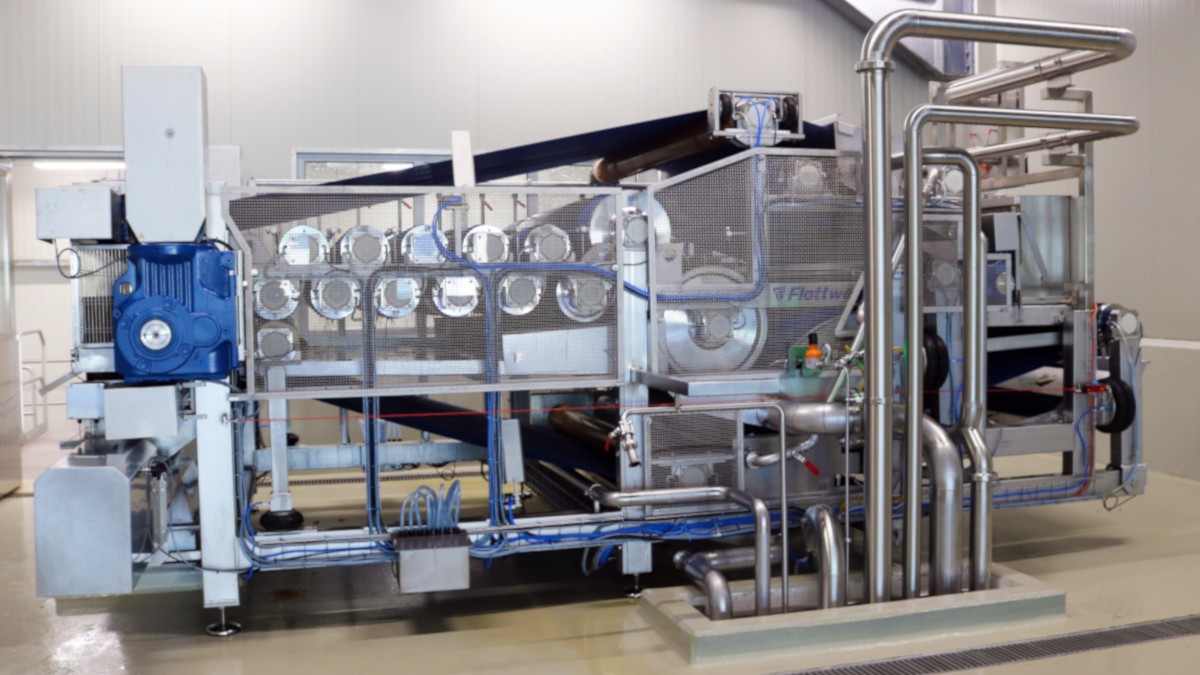
The Flottweg belt press in fruit juice production: high juice yield and dry pomace Copyright: ©Flottweg SE
What experiences shape your view of modern separation technology, and which developments do you consider particularly relevant?
Daniel Obrist:
- 1. Small process adjustments often have a big impact. A real eye-opener for me was the realisation that even minor changes to parameters such as press pressure or drum speed can significantly improve yield and product quality.
- 2. Fluctuations in raw materials are increasing. Climate influences and supply chain issues lead to varying raw material qualities. Precisely designed, automated process control helps to compensate for these fluctuations and ensure consistent product quality.
- 3. Digitalisation is becoming a competitive factor. High mechanical performance alone is no longer sufficient. Today, automatic process control, digital recipe management, CIP documentation and continuous parameter monitoring are crucial. Many companies see this as a key lever for process reliability and cost-effectiveness.
Conclusion: Modern separation technology is much more than just a tool – it is a key lever for efficient, resource-saving and stable production. Whether in the beverage industry, with plant-based raw materials or in the processing of side streams: Without precise separation, many modern production processes cannot be implemented.
About Flottweg
Flottweg SE is a German manufacturer of mechanical separation technology based in Vilsbiburg. The company is one of the leading suppliers of decanter centrifuges, separators and belt presses and employs over 1,200 people worldwide.
For additional information, go to:
Daniel Obrist
Global Sales & Application Engineer
Beverage & Dairy
Flottweg SE
Industriestraße 6-8
84137 Vilsbiburg
Deutschland
E-Mail:
ob@flottweg.com
Web:
https://www.flottweg.com