-

-
Magazine
Process Technology
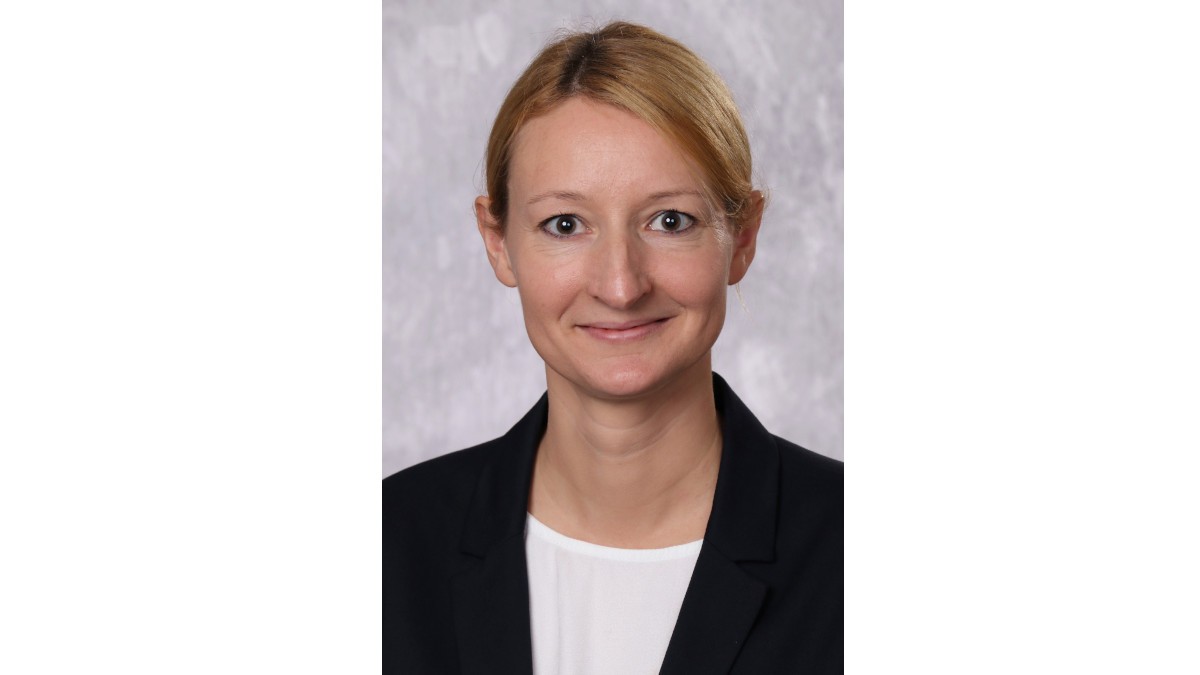
Dr Mack, hygiene and food safety have become significantly more important in recent years. What does this mean for WIKA as a manufacturer of process measurement technology? What requirements does this entail?
Technical equipment in hygiene-sensitive production areas must meet the highest hygiene standards – such as the EHEDG guidelines and the 3-A specifications. We meet these requirements with our product range: Our sensors are easy to clean, CIP/SIP-compatible and support the safe monitoring of critical processes. In this way, we actively contribute to quality assurance and risk minimisation in food production.
In Europe, it is the European Hygienic Engineering & Design Group, which you mentioned, that tests and certifies components for cleanability. In the US, the 3-A standard is the benchmark. How important are the respective standards in the design of your solutions?
Both are design principles for us. The EHEDG influences the design with its requirements for cleanability, which we achieve through dead-space-free geometries and defined surfaces. The practical testing and certification by the EHEDG confirms the hygienic design of our products and is a recognised mark of quality.
… and the 3-A standard?
It provides clear specifications regarding radii, material selection and surface roughness – these are incorporated directly into our design processes. Although there is no external certification, compliance with the standard is essential for use in the US food industry. This is how we ensure that our products can be used worldwide in a hygienic, reliable manner – with EHEDG certification and 3-A compliance as the basis for our design.
Easy to clean and leaves no residue – what exactly does that mean?
We achieve easy cleanability of the measuring devices through dead-space-free geometries, low-gap transitions and defined surface roughnesses, which are typically less than 0.8 micrometres. High-quality stainless steels are used, which are suitable for CIP/SIP cleaning processes and comply with international standards such as EHEDG and 3-A. This ensures safe, hygienic process control.
What other standards or guidelines play a role?
In addition to EHEDG certification and 3-A standards, our measuring devices comply with numerous international and national standards relevant to the food and beverage industry. These include the requirements of the US Food and Drug Administration, particularly with regard to material compatibility and hygienic design for direct contact with food. We offer ATEX-compliant solutions for use in potentially explosive atmospheres. In addition, our products also meet regional requirements: High-quality CrNi steel is used as the food contact material. We certify its suitability in accordance with both Regulation (EC) No. 1935/2004 and the Chinese GB 4806.1-2016 National Food Safety Standard. We provide comprehensive certificates within the framework of HACCP concepts.
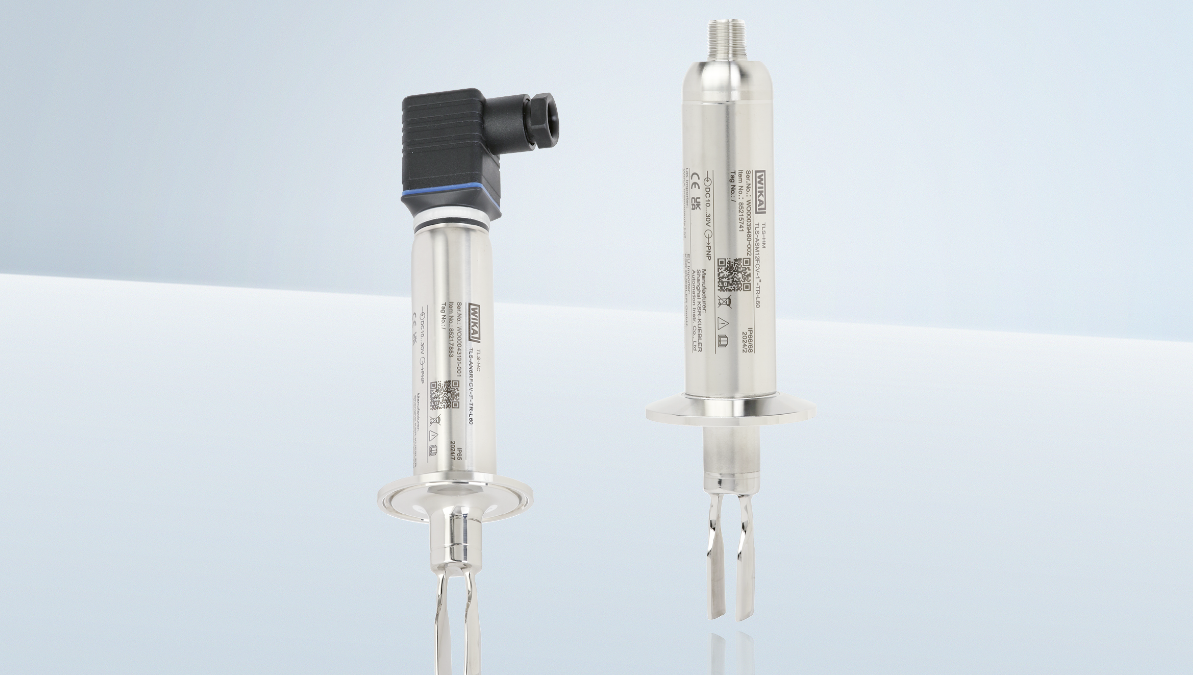
WIKA has recently expanded its portfolio in the field of fill level measurement technology. The TLS vibration fill level switch is now available with EHEDG certification for hygienic applications. What are the special design features, particularly with regard to cleanability and process reliability?
The new TLS-H version meets the criteria of EHEDG Class Type El Class I, making it ideal for sensitive production areas. It features a dead-space-free design and a high-quality surface finish with Ra ≤ 0.76 micrometres – characteristics that ensure reliable cleaning and high process reliability. The use of stainless steel 1.4404 (316L) and suitability for CIP/SIP processes underline the hygienic standards.
©WIKA Alexander Wiegand SE & Co. KG
What challenges had to be overcome during the development of the TLS-H in terms of sealing design, surface quality and freedom from dead space?
The dead-space-free design required precise geometry that reliably prevents residues and enables complete cleaning without dismantling. In addition, the TLS-H is available with different surface roughnesses to meet the specific requirements of the respective application and to fulfil the requirements for hygienic design and CIP/SIP cleaning. The sealing concept was designed to be EHEDG-compliant while also ensuring a secure seal without dirt traps. This was achieved, for example, by using coordinated materials and suitable process connections.
Can you give examples of where the device is used in the food industry?
The TLS-H is used in particular for fill level measurement in tanks and pipelines. Typical applications include monitoring media such as milk, yoghurt, cream, liquid egg, liquid cheese and cleaning fluids such as lye and acid. On the one hand, the TLS-H is used to detect and control high and low levels in liquid containers. On the other hand, the vibrating fill level switches are used for liquid detection in pipes to prevent the pump from running dry. As the vibrating fork protrudes only 38 millimetres into the pipe, it can be used to measure pipes with small diameters.
Finally, what other trends are currently emerging in process measurement technology?
Process measurement technology is increasingly evolving towards intelligent, networked systems that not only measure precisely, but also actively contribute to process reliability and efficiency. WIKA relies on IoT-capable solutions with integrated condition monitoring, which enable predictive maintenance and therefore higher system availability. At the same time, the issue of sustainability is becoming increasingly important: Our focus is on durable measurement solutions that help customers make their production processes resource-efficient and environmentally friendly. Among other things, this includes measurement technology that is easy to clean, helping to save water, energy and cleaning agents.
For additional information
WIKA Alexander Wiegand SE & Co. KG
Alexander-Wiegand-Straße 30
63911 Klingenberg,
Germany
www.wika.de