-

-
Magazine
Recyclable Mono Films for Thermoformers
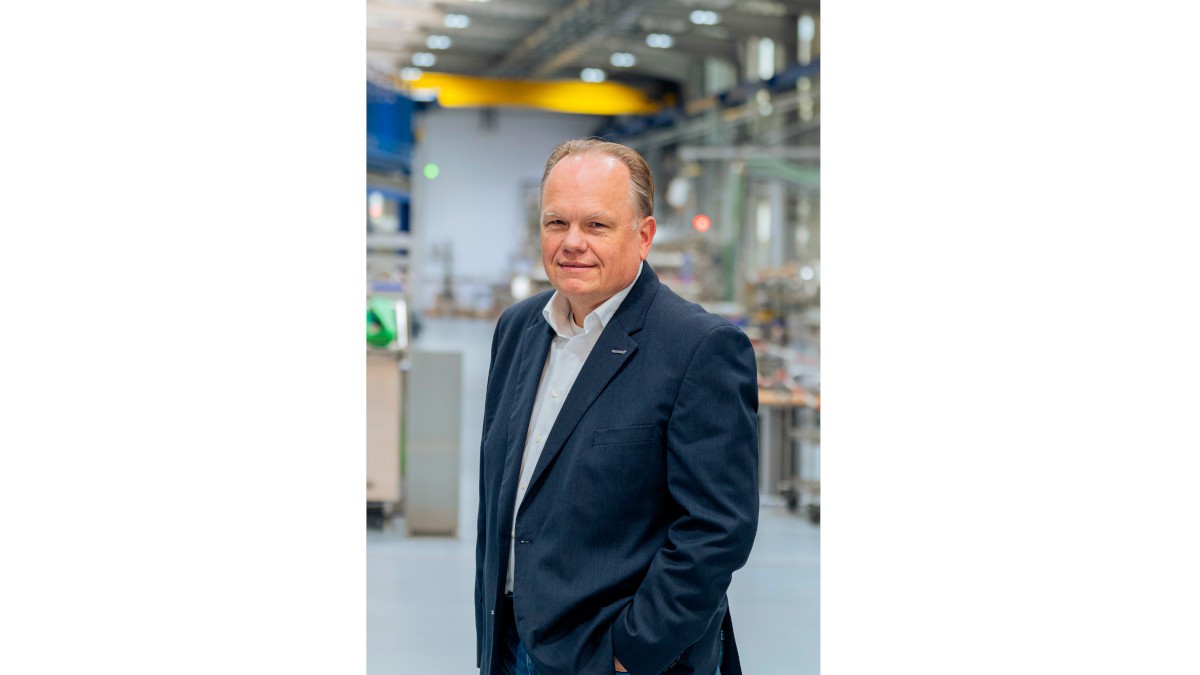
Mr Dietrich, Weber doesn't offer packaging films itself. Why is your expertise in recyclable mono films nevertheless in demand among customers?
That's right, we offer food manufacturers complete processing and packaging lines, including thermoformers for different output quantities. These include the compact wePACK 4000 thermoforming packaging machine and the powerful wePACK 7000. Both process all common and sustainable packaging materials. Our focus is on packaging for cold cuts, i.e. products such as sausage, cheese and vegan alternatives. In order to use recyclable mono films, which are preferred under the PPWR, instead of composite films, the plastic polymers and machine and process settings must be coordinated and optimised. And that requires expertise and experience.
Which polymers are usually involved? What are the main differences?
The usual recyclable hard-shell packaging is mostly made of mono films based on either PP, i.e. polypropylene, or PET, i.e. polyethylene terephthalate. PE, or polyethylene, is also used in the soft film sector. To ensure sufficient barrier properties for fresh foodstuffs, both PE and PP are supplemented with a gas barrier in the form of a thin EVOH layer. As long as the barrier layer doesn't account for more than five per cent of the total packaging weight, the packaging is still approved for mechanical recycling. The use of PCR, or post-consumer recyclates, is not yet possible on a large scale here. This is because PCR made from PP and PE is not yet available in a sufficient quality and quantity for use in food packaging. Not even if it were only used in the intermediate or outer layers of packaging. However, this would mean that the entire package would have to be considered recyclable material.
The situation is different for PET. According to current regulations, this may only be used as a genuine mono-material – i.e. without an EVOH layer, unprinted, undyed and without any other additives that could contaminate the recycled material. PET can therefore only be used as a shell or underlay film. In addition, it must account for at least 80 per cent of the total packaging weight. The lid or top film is still classified as waste and is not recycled. On the other hand, PET also offers clear advantages: Transparency is greater, the rigidity of the shell is better, and the gas barrier is also better. While the latter is somewhat weak for boiled sausage packaging, it proves to be ideal for sliced cheese.
We therefore see two trends in the cold cuts sector in Germany: In the cheese sector, the trend is towards PET, while in the sector for cooked sausage slices and similar products, including vegan alternatives, PP is the preferred choice. Based on our experience, the trend across Europe is shifting towards PET. That simply depends on how the Member States implement the PPWR.
As an experienced machine manufacturer, how would you rate the machinability of the recyclable mono films mentioned? What do users need to bear in mind?
Thermoformers like ours can be used to safely and reliably produce high-quality packaging from PP and PET. However, the materials place different demands on the process. When using PP, cycle times may be reduced as heating and moulding take slightly longer. PP has higher energy requirements, a higher moulding temperature and, unfortunately, poorer thermal conductivity. In addition, the thermal processing window is quite small. The films on the market are improving, but more than twelve cycles per minute would still be virtually impossible. When it comes to heat sealing, the performance of mono-PP is only slightly inferior to that of classic PE sealing layers. However, it is quite resistant to contamination, which is not the case with PET. On the one hand, this has the advantage of being easier to shape than PP. On the other hand, PET is very sensitive to excessive heating and excessive temperatures. This would lead to an alteration of the film surface, which would cause problems during sealing.
What about labelling for recyclable packaging?
This is entirely possible, provided that the guidelines for evaluating labels issued by the Central Agency for Packaging Registration (ZSVR) are followed. Every year, it publishes a minimum standard for recycling-friendly packaging design. If, for example, the main material of the packaging is PET or PP, any labels made of a different material that are subsequently affixed to it must at least be washable with hot water. Although they do not cause any problems, they are not considered recyclable components per se. To ensure uninterrupted sorting during the recycling process, labels should also not cover more than half of the surface area. If the labels are made of the same material as the packaging, for example PP packaging also made of PP, they are considered recyclable and count as recyclable components. Another requirement for PP labels concerns density. This must be less than 1 g/cm³ in order to be isolated during mechanical separation and to be classified as recyclable material. As labels are also an important criterion in terms of recyclability, our Weber thermoformers not only process all common and sustainable packaging materials, they also enable manufacturers to create individual and recyclable packaging designs for attractive product presentation at the point of sale.
For more information, go to: https://www.weberweb.com/de/
About Weber Food Technology
Founded in 1981, Weber Food Technology is headquartered in Breidenbach, in the German state of Hesse, and employs around 2,100 people in 22 countries. The family-owned company's core competencies lie in cutting and packaging lines for industrial food processing. The machines are manufactured at German production sites with an in-house production rate of 80 per cent.