-

-
Magazine
Robust and Hygienically Sound
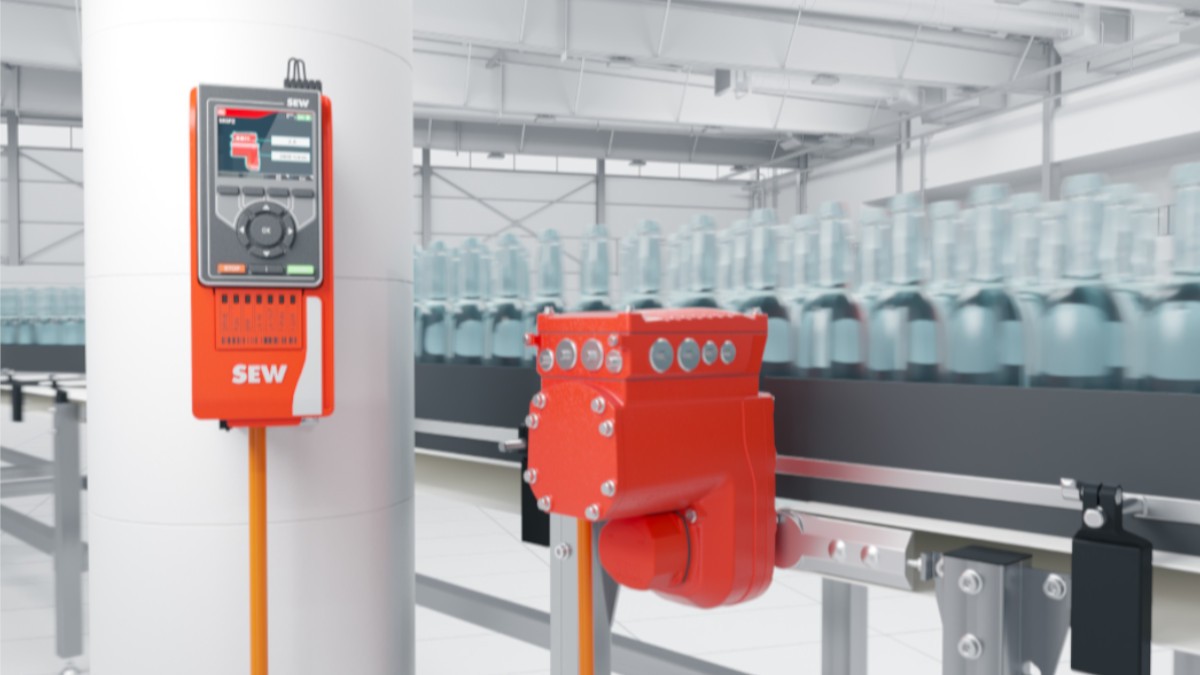
Hygienic, safe production
When designing motors and gearboxes, the focus is inevitably on hygienic construction. The degree of requirements for hygienic design is determined in accordance with DIN EN 1672-2 (Food processing machinery – General guidelines for design – Part 2: Requirements for hygiene and cleanability) based on the possibility of contact with food. This results in three different production zones. Wherever possible, gearboxes and motors, including frequency converters, should not be used in the immediate "food area" (a). Food can come into contact with the system components here and then return to the processing process. As a result, long cleaning intervals are required, which means that the systems and the components installed in them must have a high level of chemical resistance and be designed to enable residue-free cleaning.
Ideally, drives should be placed outside this zone in the "splash zone" (b) defined in DIN EN 1672.2. Here as well, components that have been certified in accordance with hygienic design should be given preference. Hygienic drive solutions are a must, especially during processing and primary packaging of perishable foods such as meat and fish, and are required by a wide range of guidelines. In the "non-food sector" (c), away from the actual production processes, the requirements are comparable to those in the traditional industrial environment. The risk of food contamination is lower here. However, it may also be advisable to opt for hygienic design solutions in this case. Mechanically, this is not always easy to achieve, but it is largely feasible with smooth and special surfaces and an easy-to-clean design.
Which drive is suitable for which application?
Is the drive occasionally exposed to splashing water, or is it cleaned with hot steam and added chemicals when at operating temperature? Based on their comprehensive modular systems, the exhibitors at Anuga FoodTec supply complete drive solutions that cover a wide speed range and withstand daily cleaning procedures. Manufactured in stainless steel or with surface finishing, they comply with the guidelines of the European Hygienic Engineering Design Group (EHEDG). Smooth surfaces with a roughness of less than 0.8 micrometres and rounded radii larger than three millimetres facilitate cleaning. This consistently avoids recesses and potential "dirt traps" such as corners and edges. The high demands placed on durability and ease of cleaning mean that compact units consisting of synchronous servo motors and planetary gearboxes are resistant to hot steam and corrosive cleaning agents.
And not without reason: Drive solutions for the food industry must be resistant to cleaning agents, as they are frequently cleaned and disinfected due to high hygiene standards. In addition to a defined temperature range, resistance to corrosive effects such as water or acids and protection against dust ingress also play a decisive role when it comes to durability. Electrical components are classified according to these criteria using the IP (Ingress Protection) rating.
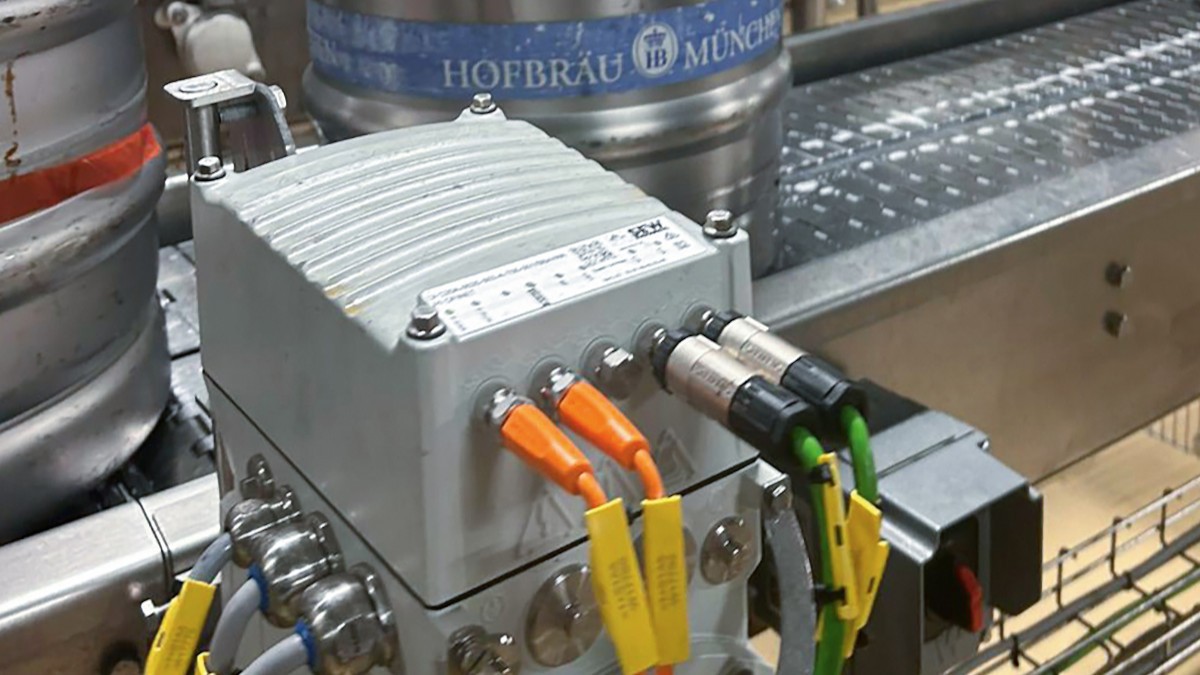
The Munich State Brewery renewed its barrel filling facility in 2024. Decentralised drive units ensure energy-efficient operation of the conveyor technology. © SEW Eurodrive
Reliable operation with high-pressure cleaning
The designation consists of the letters IP and two digits. The first digit from zero to six indicates protection against dust and foreign objects. The higher this number, the better the drive is protected against fine dust. "6" stands for absolute dust tightness. The second digit from zero to nine indicates resistance to water ingress. While "1" only promises protection against light dripping water, "9" indicates the highest possible protection against water ingress during high-pressure or steam jet cleaning. The protection class of corresponding stainless steel servo gear motors for the spraying area is therefore usually IP69K. The drives are resistant to superheated steam and corrosive cleaning agents – two requirements for CIP and SIP (Clean In Place, Sterilisation In Place) processes typical in the food industry.
However, the drive specialists at Anuga FoodTec also offer various solutions with lower protection classes for the dry part of production, outside the spraying area. These can be designed either with a converter integrated in the motor or for installation of the converter in the field close to the motor. The decentralised installation of the drive units enables consistent modularity, for example in transport systems in the beverage industry. Depending on the local conditions, conveyor elements can be combined as standardised and self-sufficient modules with uniform interfaces for a flexible system layout. When it comes to demanding transport applications, drive components that can adapt quickly and flexibly to different conditions, cause as little noise as possible, require little energy and are nevertheless easy to clean are essential. The technology must be robust in order to precisely position and manoeuvre the heaviest loads.
Double throughput thanks to decentralised drive technology
The example of the Hofbräu brewery in Munich, which renewed its keg filling system in 2024, shows what this can look like in practice. A total of around 85 predominantly decentralised drives for various transport and lifting equipment were installed in the new KEG system. Units from SEW-Eurodrive's modular automation system ensure energy-efficient operation of the conveyor technology. The brewery's requirements were defined in an electrical specification. In specific terms, all new drives should at least meet the requirements of energy efficiency class IE3. The mechatronic drives from the MOVIGEAR performance series now in use even exceed this requirement with their IE5 efficiency class. The cross-section for the power supply cable is now also significantly smaller than in the old KEG system. Thanks to more compact designs and decentralised drive systems, i.e. without control cabinets, Hofbräu in Munich can now achieve twice the filling capacity on the same floor space. The facility was completed in May 2024 and has been operating to the operator's complete satisfaction ever since.
Further information