-

-
Magazine
Solutions for Preventing Cross-Contamination
Technological approaches
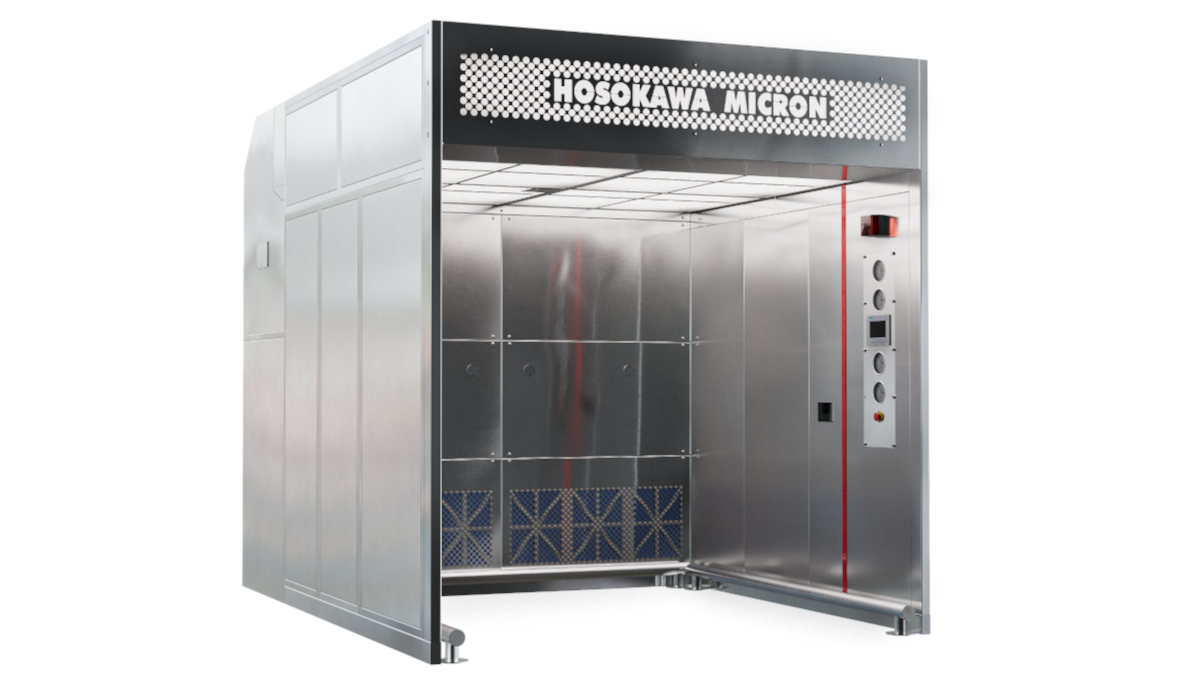
Hosokawa Micron Ltd. utilises downflow booth technology, which employs a unidirectional, downward airflow of HEPA-filtered air to create a contained, easy-to-clean environment for handling powders and other hazardous materials. The air flows over the operator, pushing all airborne contaminants out of his/her breathing zone and into a filter system at the rear of the booth, where they are captured and removed.
This technology is used in many industries, particularly in the food industry, and is crucial for operator safety and product integrity.
Russell Finex, on the other hand, focuses on the screening process itself. "We can offer an airlock control sieve that is designed for an OEL (Occupational Exposure Limit) 5 containment," emphasises Buchholz. The sieves can be quickly dismantled and cleaned without tools, thereby meeting the requirements for fast, safe product changes.
Integration into existing systems
It must be possible to seamlessly integrate both systems into existing production lines. Hosokawa Micron Ltd. achieves this with airflow booths that capture dust directly via filters and relieve the working area. "The employees can carry out their work without restriction, the work area remains dust-free, and separate cleaning is not necessary," emphasises Carl Emsley. After cleaning, the booths can be used for various activities, offering a high degree of flexibility.
Russell Finex focuses on compact systems that can be installed even in confined spaces. "We often have to integrate a control sieve into tight or difficult installation situations to ensure that no foreign objects or oversized particles remain in production," emphasises Steven Bucholz. This is supported by globally active sales engineers who inspect production lines on site and select a suitable solution.
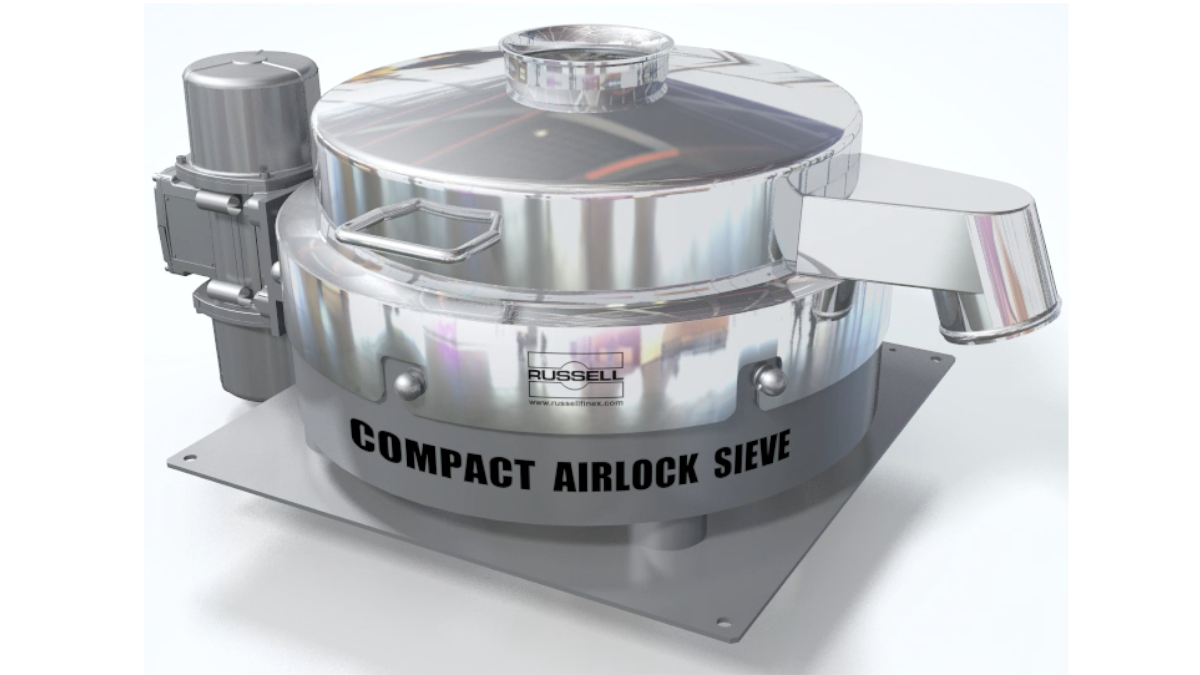
Russell Finex Compact Airlock Screening Machine ©Russel Finex
Cleaning and practical application
Hosokawa Micron Ltd. offers systems that can incorporate disposable containers and disposable filters and operate with CIP or SIP technology as standard in the food sector. "These systems make cleaning much easier and support the correct validation of the plant," explains Emsley. In practice, the company relies on downdraft recirculation booths that achieve a filtration efficiency of at least 99.95 per cent at MPPS. They are used in particular where hazardous, toxic or allergenic powders are handled – for example, during weighing, dosing, packaging, filling or sampling.
Russell Finex also aims to minimise operator intervention. "We adapt our machines to the needs of our customers and can incorporate many options to minimise operator interaction as much as possible," emphasises Buchholz. The modular screens and inspection openings enable quick checks during ongoing operation. The company reports on applications in the field of nutraceuticals and sensitive powders. "Our customers are the largest companies in the food industry as well as many local businesses worldwide," reports Buchholz. Thanks to their design, the compact screens can easily be integrated into existing lines and reliably remove oversized particles and foreign objects.
Future-oriented developments
Hosokawa Micron Ltd. describes a trend towards automated processes, closed transfer systems, modular and standardised systems, as well as mobile units and digital traceability. "Predictive maintenance, energy-efficient fans, LED lighting, energy-saving operating modes, automated product changes, closed transfer systems and mobile or modular solutions will become increasingly important in the future," explains Emsley.
Russell Finex focuses on simple, quick, seven-sided inspections during operation. "Customers only need to check the screen regularly, and we ensure that this inspection is as quick and easy as possible, both today and tomorrow," emphasises Buchholz.
Conclusion:
Hosokawa Micron Ltd., deckt die raum- und lufttechnischen Anforderungen ab, während Russell Finex die prozessnahe Absicherung innerhalb der Siebtechnik gewährleistet. Zusammen zeigen die Lösungen, wie Containment entlang der Wertschöpfungskette umgesetzt werden kann, um Kreuzkontaminationen auf verschiedenen Produktionsebenen zu vermeiden und Produkte sowie Mitarbeitende zuverlässig zu schützen.
Company information
Hosokawa Micron Ltd., a sister company of Hosokawa Alpine AG, has its headquarters in Runcorn, England, and has been a wholly owned subsidiary of the Japanese Hosokawa Micron Corporation since 1984. Since 1964, the company has been developing solutions for the food, pharmaceutical and chemical industries and has established a global network.
Russell Finex Ltd. is a British specialist in screening machines, separators and self-cleaning filter systems, founded in 1934, with its current European headquarters in Belgium. With locations worldwide, the company supplies solutions for the food, pharmaceutical, chemical and other industries and is considered a leader in ultra-fine screening technology.
For additional information:
Carl Emsley, Sales Manager at Hosokawa Micron Ltd. ©Hosokowa Micron Ltd.
Hosokawa Micron Ltd
Carl Emsley
Sale Manager
Rivington Road, Whitehouse Industrial Estate,
Runcorn, Cheshire
WA7 3DS, UK
C.Emsley@hmluk.hosokawa.com
https://www.hosokawa.co.uk/
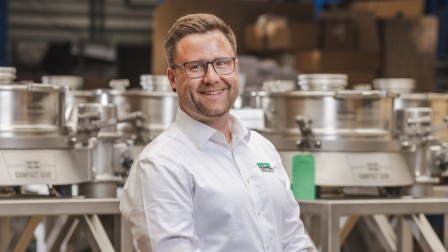
Steven Bucholz, Senior Sales Manager for North-Eastern Germany at Russell Finex. ©Russell Finex
Russell Finex N.V.
Steven Buchholz
Senior Sales Engineer
Nord- und Ostdeutschland – Büro Halle (Saale)
Zandvoortstraat 20,
Industriepark Noord C20,
B-2800 Mechelen, Belgium
steven.buchholz@russellfinex.com
https://www.russellfinex.com/de/