


-

-
Magazine
Technologies for the Smart Meat Factory
Partner for digitalisation
Meat processors face a potentially immense amount of data when using modern technologies in their processing and packaging processes. The question is, how can these be extracted and used to combine production and business management in the spirit of a smart meat factory? According to IT specialists at SLA and Modus Consult, this requires a standardised connection between real-time processes on the shop floor and cloud ERP to ensure a continuous flow of materials and values from raw material receipt through production to reporting. And this is precisely where the collaboration between the two companies comes in. By closely integrating their solutions, SLA and Modus Consult aim to create a joint platform that makes processes along the entire value chain visible, controllable and more efficient. Companies in the meat industry are to benefit from up-to-date data, faster decisions and more stable processes.
This means: For producers, this creates a continuous digital flow across all relevant processes – from raw material receipt to processing and logistics to economic control. The close link between production and ERP data ensures greater process stability, less manual data entry and reliable evaluations that provide a transparent picture of value creation. "The common focus is on reducing complexity, making data usable to simplify daily processes and create sustainable competitive advantages," says Hermann Grevemeyer, Managing Director of SLA Software Logistik Artland.
Connecting production and cloud ERP
SLA brings decades of experience in meat and food production to the table. The company offers machine and line connectivity via scale integration and real-time data collection, as well as practical apps and dashboards for quality, traceability and performance indicators. The solutions are designed to support robust, fail-safe production processes: Data is collected directly on the line, validated and made available for downstream steps. These range from booking individual work steps to displaying throughputs and process status in real time.
Modus Consult complements this shop floor expertise with comprehensive expertise in ERP, finance and accounting, controlling, costing, reporting, purchasing, sales and EDI connectivity right through to food retail. The information recorded in production flows into Microsoft Dynamics 365 Business Central, where it is processed into evaluations, planning data and control impulses. This creates an integrated solution that combines production and business management perspectives in a single, comprehensive system.
The joint project at H. Klümper in Schüttorf, Lower Saxony, is a prime example of this collaboration. At the meat producer, the combination of modern production recording and cloud ERP ensures that all relevant data from production is recorded digitally in its entirety and further processed in the ERP system. "This combination creates consistency that is immediately noticeable in everyday life," explains Managing Director Sinah Klümper.
Real-time machine performance
Simplify processes and make data-driven decisions: Not only software specialists, but also plant manufacturers are working on solutions for the smart meat factory. For example, Maschinenfabrik Seydelmann relies on modern Overall Equipment Effectiveness (OEE) displays for its production lines for manufacturing meat and meat alternatives. They ensure transparent monitoring of machine performance in real time, thereby optimising the entire production line. They provide data on the availability, performance and quality of the machines. Production managers can use this real-time information to respond to disruptions or deviations, minimise unplanned downtime and increase capacity utilisation. Weak points are quickly identified, thereby facilitating preventive measures and interface optimisation. Not only the machines themselves, but also upstream and downstream process steps can be included in order to control the entire production chain.
Digitally optimised processes
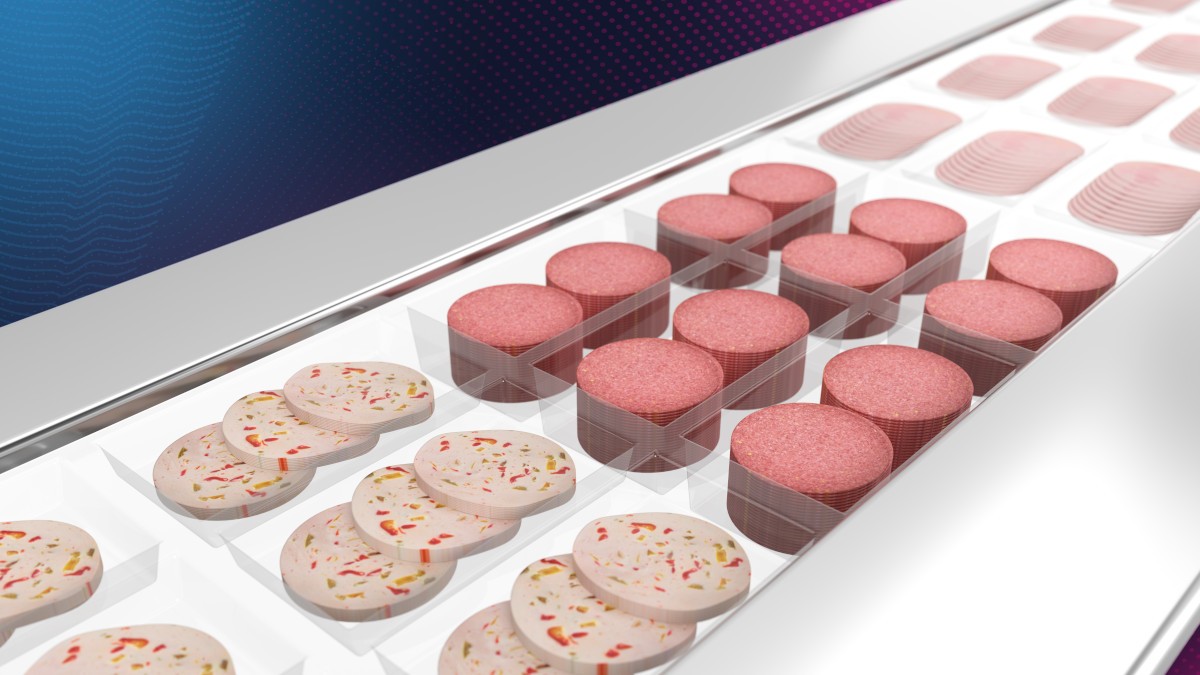
Continuous data collection improves capacity coordination, shortens throughput times and ensures higher product quality through early detection of deviations in quality. At the same time, transparency promotes the responsible use of resources: Raw materials, working time and energy can be used more efficiently and costs can be reduced in the long term. This strategy is also being pursued by Anuga FoodTec exhibitor Multivac. The mechanical engineering company's latest innovations include highly automated, software-supported production lines. These include a high-performance slicing line for raw ham products and a meat portioning line for trays. Thanks to digital networking, all components can be seamlessly controlled and evaluated via Multivac Line Control (MLC). "A key component of this optimisation is the live data analysis of the individual line segments. This creates full transparency across the entire portioning and packaging process," explains CSO Dr Tobias Richter.
MLC also enables centralised operation of the entire line and easy connection to ERP, MES, MRP or PPS systems for seamless production processes. A new function is continuous item changeover. It allows users to switch between different items during operation without interrupting production or having to run the line empty. This can reduce downtime by up to 95 per cent. At the same time, resources are used more efficiently by minimising product losses and the consumption of film, labels and energy.
Tobias Richter concludes: "Rising costs, labour shortages and strict sustainability requirements call for solutions that take all aspects of the value chain into account – from raw material processing to packaging. Smart processing and packaging technologies are real competitive factors in this regard: Not only do they help to optimise machine operation in the long term, they also enable agile production that can be adapted to the growing demands of a changing market."